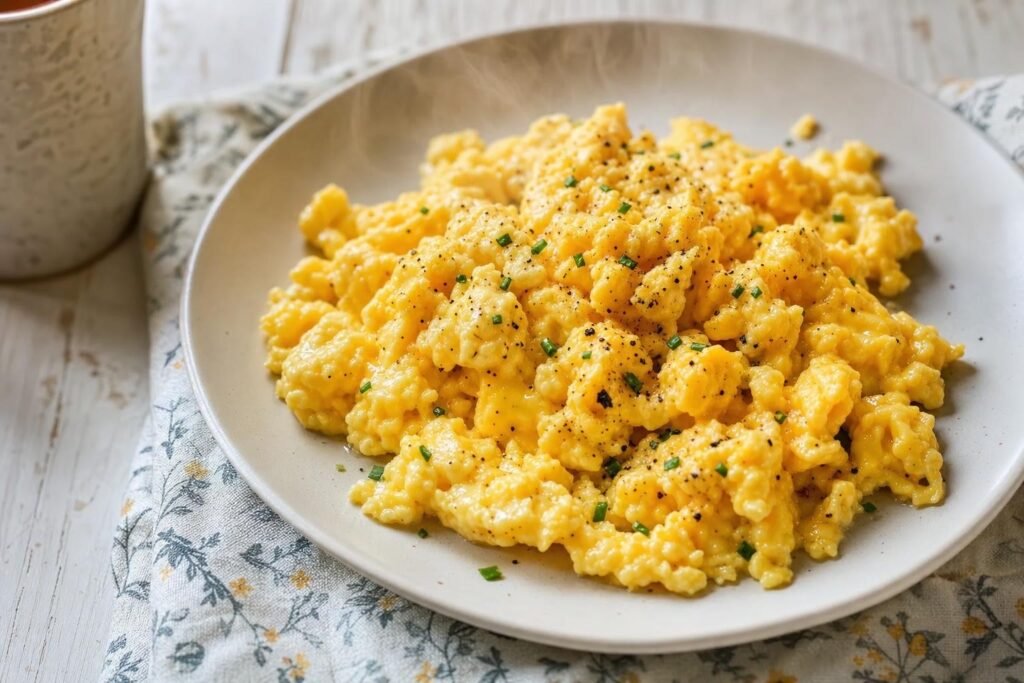
Scrambled eggs sound simple, but most people cook them too fast and end up with dry, rubbery curds. The secret is low heat and a little patience — pulling them off the stove just before they look done, so the residual heat finishes the job. Master that one move and you’ll get soft, creamy, restaurant-quality eggs every single time.
We’ve cooked these more mornings than we can count, and the method below is the one that consistently delivers the softest curds with the least effort. Once you get the technique right, you’ll never go back to the rushed version.
Why This Works
Eggs are mostly protein, and protein turns tough when it cooks too quickly or too hot. Low heat lets the proteins set gradually, trapping moisture and keeping the texture soft and custardy. The butter adds richness and helps prevent sticking, while a splash of milk or cream keeps the eggs tender rather than firming up into a dense block. Folding instead of stirring builds those large, pillowy curds — and pulling the pan early means the eggs finish cooking from residual heat instead of drying out.
Ingredient Notes & Substitutions
- Eggs: Fresh large eggs are the standard. Let them sit out for a few minutes — room-temperature eggs cook more evenly than cold ones straight from the fridge.
- Butter: Real butter gives the best flavor and keeps the eggs from sticking. Keep the heat low so it melts without browning.
- Dairy: A splash of whole milk or heavy cream keeps the curds tender. For a dairy-free version, use olive oil instead of butter and skip the milk — the low-heat method still works beautifully.
- Seasoning: A pinch of salt in the raw eggs plus a little more at the end is all you need. Fresh chives, parsley, or dill make a nice finishing touch.
Tools You’ll Need
Classic Scrambled Eggs
Ingredients
- 4 large eggs
- 2 tbsp butter
- 2 tbsp whole milk or heavy cream
- Salt and pepper, to taste
- Fresh chives or parsley, for garnish optional
Instructions
- Crack the eggs into a bowl. Add the milk or cream, a pinch of salt, and pepper. Whisk until fully combined and slightly frothy.
- Heat a non-stick skillet over low heat. Add the butter and let it melt slowly — do not let it brown.
- Pour in the egg mixture. Let it sit undisturbed for about 30 seconds, until the edges just begin to set.
- Using a rubber spatula, gently push the eggs from the edges toward the center in slow, wide folds. Do not stir constantly.
- Continue folding every 20–30 seconds, keeping the heat low. The eggs should form large, soft curds.
- When the eggs are just slightly underdone and still look glossy, remove the pan from the heat. The residual heat will finish cooking them.
- Season with salt and pepper, garnish with fresh chives or parsley, and serve immediately.
Notes
Common Mistakes to Avoid
- Cooking on high heat: The single biggest mistake — it cooks the outside before the inside sets, giving you rubbery eggs. Keep it low the whole time.
- Stirring constantly: Aggressive stirring breaks the curds into tiny, dry bits. Slow, gentle folds create soft, large curds.
- Leaving them on too long: If they look fully done in the pan, they’ll be overcooked on the plate. Pull them early and let residual heat finish the job.
Variations & Add-Ins
- Cheesy eggs: Fold in a handful of shredded cheddar, Gruyère, or crumbled feta just before the eggs finish cooking.
- Loaded: Add smoked salmon, sautéed mushrooms, wilted spinach, or diced ham in the last minute.
- Herby: Stir in fresh chives, dill, or parsley right at the end for brightness.
Storage
Scrambled eggs are really best eaten the moment they’re done — they don’t store or reheat well, turning rubbery and weepy once chilled and warmed back up. If you must, refrigerate in an airtight container for up to a day and reheat very gently, but fresh is always better.
Frequently Asked Questions
Should I add milk to scrambled eggs?
It’s optional. A small splash of milk or cream keeps the curds tender, but don’t overdo it or the eggs can turn watery. Some cooks skip it entirely and rely on butter alone — both work.
Why are my scrambled eggs watery?
Usually too much added liquid, or letting cooked eggs sit before serving. Use just a splash of dairy, cook gently, and serve right away.
High heat or low heat for scrambled eggs?
Low and slow, every time. High heat is what gives you dry, rubbery eggs. Gentle heat is the whole secret to soft, creamy curds.
Can I make them dairy-free?
Yes. Use olive oil or a dairy-free butter instead of regular butter and leave out the milk. The low-heat folding method still gives you soft curds.
For a cozy breakfast spread, pair these with our French Toast or add a batch of our Blueberry Muffins to round out the table.
See the full kitchen lineup on our Tools & Equipment page.
Leave a comment! We’d love to hear from you!