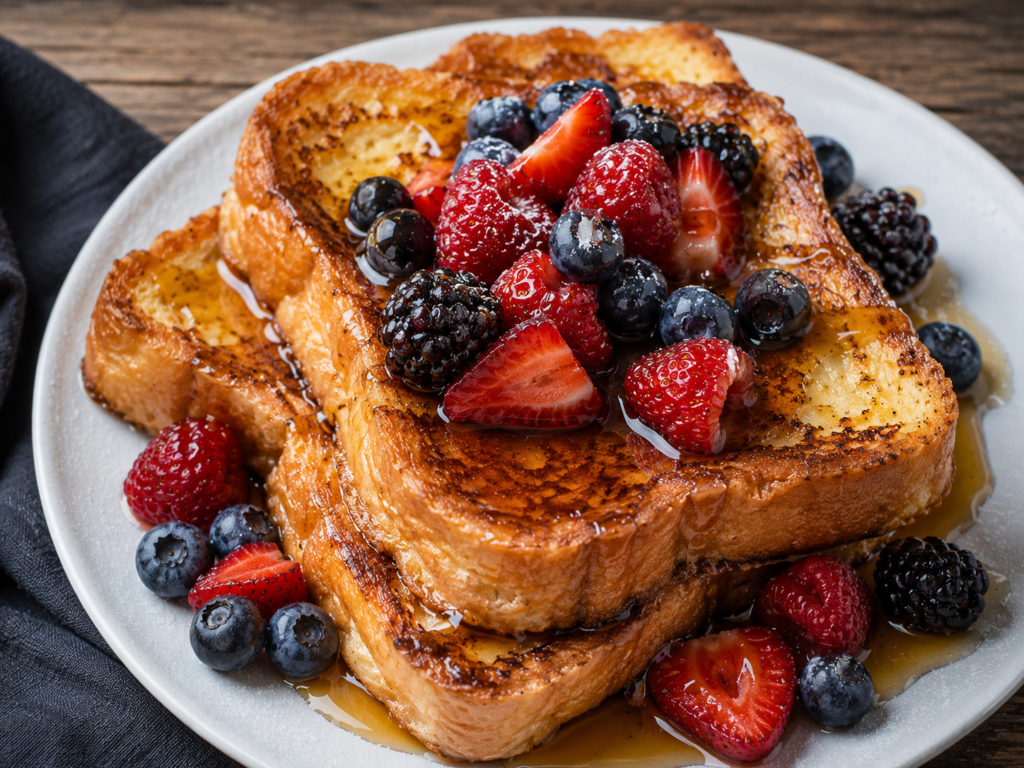
French toast feels indulgent but takes almost no effort — a quick custard, a hot pan, and a few minutes per side. The secret to the good stuff is thick, rich bread that soaks up the custard without falling apart, and cooking it low and slow so the inside turns soft and creamy while the outside goes golden.
We make this for lazy weekends, and the difference between average and great comes down to two things: the bread you choose and keeping the heat gentle.
Why This Works
Thick slices of brioche or challah are sturdy and rich enough to soak up plenty of custard without turning to mush. The eggs, milk, and cream set into a soft, custardy interior as the bread cooks, while medium-low heat gives the inside time to cook through before the outside browns too far. A little sugar and vanilla in the custard caramelize into that classic golden crust.
Ingredient Notes & Substitutions
- Bread: Thick-cut brioche or challah is ideal — rich and sturdy. Slightly stale, day-old bread soaks up the custard best.
- Dairy: Whole milk with a splash of cream makes a richer custard. Any milk, including plant-based, works in a pinch.
- Flavor: Vanilla and cinnamon are classic. A pinch of nutmeg or a little orange zest is a lovely addition.
- Butter: Cook in butter for the best flavor and browning, adding more between batches as needed.
Tools You’ll Need
French Toast
Ingredients
- 4 thick slices brioche or challah bread about 1 inch thick
- 3 large eggs
- 1/2 cup whole milk
- 2 tbsp heavy cream
- 1 tbsp granulated sugar
- 1 tsp vanilla extract
- 1/2 tsp ground cinnamon
- 2 tbsp unsalted butter, for cooking
- Maple syrup, powdered sugar, fresh berries, or whipped cream, to serve
Instructions
- In a shallow bowl, whisk together the eggs, milk, heavy cream, sugar, vanilla, and cinnamon until well combined.
- Heat a large skillet or griddle over medium-low heat. Add 1 tbsp butter and let it melt.
- Dip each slice of bread into the egg mixture, letting it soak about 20–30 seconds per side. The bread should be saturated but not falling apart.
- Place the soaked bread in the skillet and cook 3–4 minutes per side, until deep golden brown.
- Add the remaining butter as needed between batches.
- Serve immediately with maple syrup, powdered sugar, fresh berries, or whipped cream.
Notes
Common Mistakes to Avoid
- Bread that’s too thin or too fresh: It soaks through and falls apart. Use thick, day-old slices.
- Heat too high: The outside burns before the inside cooks. Keep it at medium-low and be patient.
- Over-soaking: A 20–30 second dip per side is plenty — any longer and the bread gets soggy.
Variations
- Spiced: Add a pinch of nutmeg or a little orange zest to the custard.
- Stuffed: Sandwich a layer of sweetened cream cheese or jam between two slices before dipping.
- Berry topped: Finish with warm berry compote and a dusting of powdered sugar.
Storage
Refrigerate leftovers in an airtight container for up to 2 days, and reheat in a toaster or skillet to bring back the crisp edges — the microwave makes French toast rubbery. Cooked slices also freeze well; reheat straight from frozen in the toaster.
Frequently Asked Questions
What’s the best bread for French toast?
Thick-cut brioche or challah. They’re rich and sturdy, and slightly stale slices soak up the custard without falling apart.
Why is my French toast soggy?
Usually the bread was too fresh or thin, or the heat was too low. Use day-old, thick slices and cook over steady medium-low heat.
Can I keep it warm for a crowd?
Yes — hold finished slices on a baking sheet in a 200°F oven while you cook the rest.
Can I make it dairy-free?
Absolutely. Use your favorite plant-based milk and a little oil or dairy-free butter for cooking.
Looking for more breakfast ideas? Our Classic Scrambled Eggs are the perfect pairing, and our Blueberry Muffins make a great addition to any morning spread.
See the full kitchen lineup on our Tools & Equipment page.
Leave a comment! We’d love to hear from you!