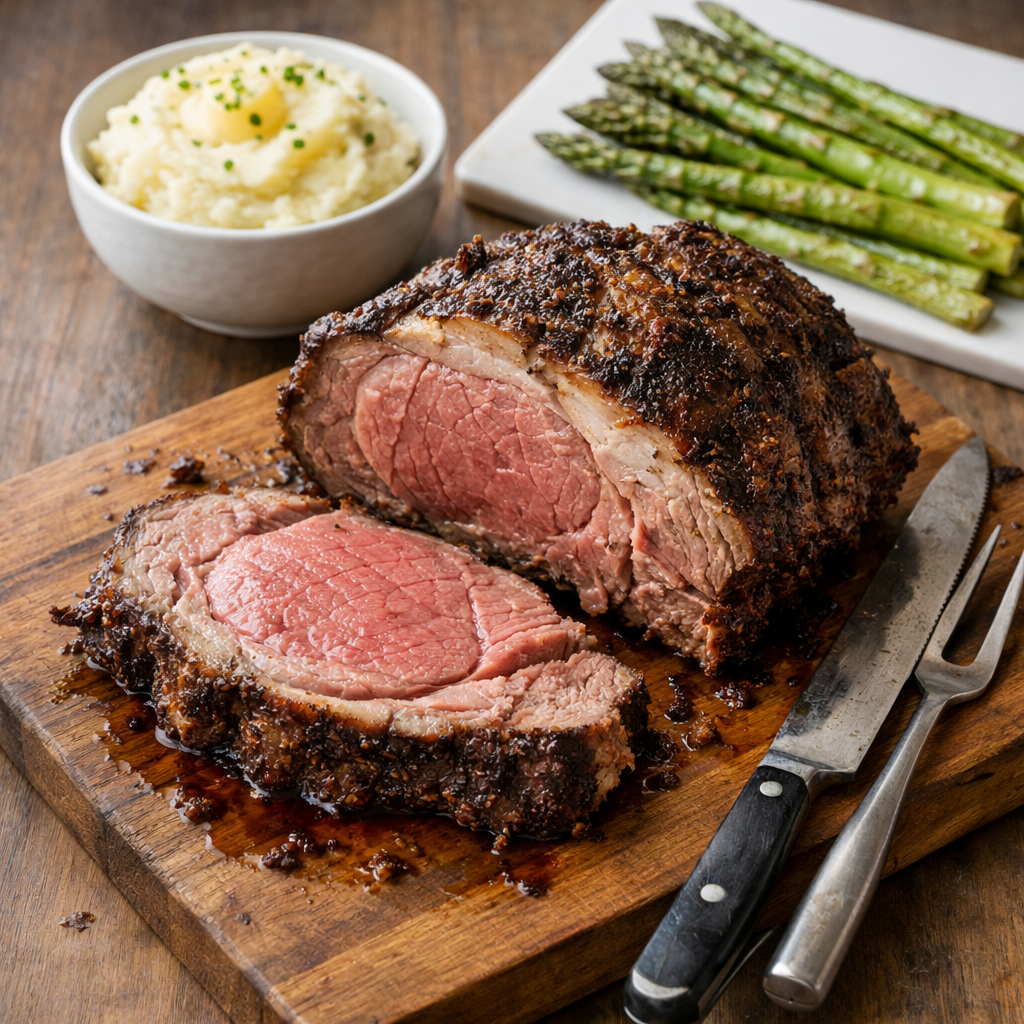
A well-cooked prime rib doesn’t need much introduction. It’s rich, tender, and meant to be the centerpiece of the table. While it looks impressive, it’s surprisingly straightforward to make at home. With a good cut of beef, simple seasoning, and the right timing, you can turn out a prime rib that feels special without being stressful.
Prep Time: 20 minutes
Cook Time: 1½–2½ hours (depending on size and doneness)
Rest Time: 20 minutes
Total Time: ~2–3 hours
Servings: 6–8
Ingredients
- 1 (5-7 pound) bone-in or boneless prime rib
- 3 tablespoons olive oil
- 3 tablespoons kosher salt
- 1 tablespoon freshly cracked black pepper
- 2 tablespoons chopped fresh rosemary
- 2 tablespoons chopped fresh thyme
- 5 cloves garlic, minced
- 1 cup beef broth (for au jus)
Instructions
- Preheat the oven to 450°F (232°C).
- Pat the roast dry and let it sit at room temperature for about 30 minutes. This helps it cook more evenly.
- In a small bowl, mix the olive oil, salt, pepper, rosemary, thyme, and garlic. Rub the mixture all over the roast, making sure it’s evenly coated.
- Place the prime rib on a rack in a roasting pan and roast at 450°F for 15 minutes to develop a good crust.
- Lower the oven temperature to 325°F (163°C) and continue roasting for about 15–20 minutes per pound, depending on how you like it cooked.
- Use a meat thermometer to check doneness:
- Rare: 125°F
- Medium-rare: 135°F
- Medium: 145°F
- Remove the roast from the oven and let it rest for at least 20 minutes before slicing. This step matters. Resting keeps the meat juicy instead of letting the juices run out onto the cutting board.
- To make au jus, place the roasting pan over low heat, add the beef broth, and scrape up the browned bits from the bottom. Serve alongside the sliced roast.
Tips for Choosing Prime Rib

To select a high-quality roast, keep these in mind:
- Bone-in vs. Boneless: Bone-in roasts are more flavorful and retain moisture. The bone also helps heat cook the meat evenly. Boneless roasts are easier to carve and take up less space in the oven, making them a convenient choice for smaller gatherings.
- Marbling: Look for good fat marbling throughout the meat. This keeps the roast juicy and flavorful.
- Dry-aged vs. Regular: Dry-aged beef has deeper, more complex flavor. Regular cuts are still excellent and easier on the wallet.
- Size: Plan on about 1 pound per person, remembering that bone-in roasts weigh more because of the bone.
What To Serve With Prime Rib
You can pair this roast with any favorite sides, but here are a few classics:
- Mashed Potatoes: Smooth, buttery, and perfect for soaking up the drippings.
- Roasted Green Beans with Parmesan: Lightly charred green beans with fresh Parmesan for contrast.
- Crispy Herb Potatoes: Golden, garlicky, and ideal for soaking up savory juices.
- Creamed Spinach: Warm, velvety, and indulgent.
- Roasted Asparagus: Fresh and bright, balancing the richness of the meat.
- Tennessee Onions: Layers of baked onions, butter, and cheese—rich and comforting.
What To Do With Leftover Prime Rib
Leftovers stay tender and flavorful, making them easy to transform into new meals:
- Tacos: Thin slices on warm tortillas, finished with fresh lime and salsa.
- Soup: Chop and add to a hearty broth with vegetables and herbs.
- Sliders: Soft buns, melted cheese, and a touch of horseradish sauce.
- French Dip Sandwiches: Pile the meat on a toasted roll with warm au jus for dipping—a classic favorite.
If you found this post useful, I’d love to hear your thoughts below.