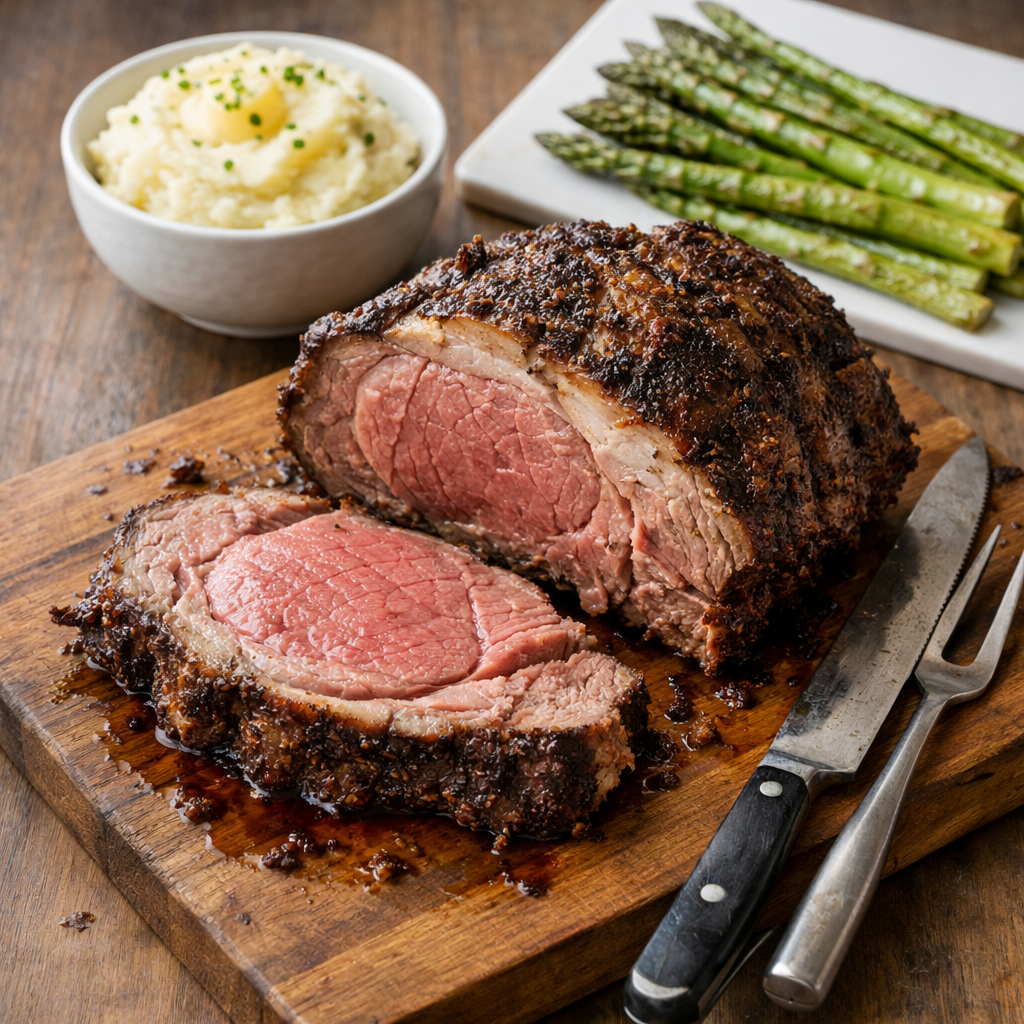
Prime rib is the showstopper of holiday dinners — a tender, juicy roast with a garlic-herb crust that looks far more intimidating than it actually is. The truth is, it’s mostly hands-off, and the biggest factor in getting it perfect is timing it with a thermometer instead of guessing.
With simple seasoning and the right cook time, this roast turns out tender, flavorful, and surprisingly easy to handle.
Why This Works
Starting at a blazing 450°F sears the outside and develops a deep, herb-crusted exterior, then dropping to a low 325°F lets the inside cook gently and evenly to your exact doneness. Roasting on a rack lets heat circulate all around the meat, and the long rest at the end lets the juices redistribute so they stay in the roast instead of spilling onto the cutting board.
Ingredient Notes & Substitutions
- Prime rib: Bone-in is more flavorful and stays moist; boneless is easier to carve. Look for good marbling throughout.
- Salt & pepper: Be generous. Kosher salt builds the crust and seasons the meat deeply.
- Herbs & garlic: Fresh rosemary, thyme, and garlic make the classic, fragrant crust.
- Beef broth: For a simple au jus made right from the flavorful pan drippings.
Tools You’ll Need
Prime Rib Roast
Ingredients
- 1 (5-7 pound) bone-in or boneless prime rib
- 3 tbsp olive oil
- 3 tbsp kosher salt
- 1 tbsp freshly cracked black pepper
- 2 tbsp fresh rosemary, chopped
- 2 tbsp fresh thyme, chopped
- 5 cloves garlic, minced
- 1 cup beef broth for au jus
Instructions
- Preheat the oven to 450°F (232°C).
- Pat the roast dry and let it sit at room temperature for about 30 minutes — this helps it cook more evenly.
- In a small bowl, mix the olive oil, salt, pepper, rosemary, thyme, and garlic. Rub the mixture all over the roast, coating it evenly.
- Place the prime rib on a rack in a roasting pan and roast at 450°F for 15 minutes to develop a good crust.
- Lower the oven to 325°F (163°C) and continue roasting about 15-20 minutes per pound, depending on how you like it cooked.
- Use a meat thermometer to check doneness: 125°F for rare, 135°F for medium-rare, 145°F for medium.
- Remove the roast from the oven and let it rest for at least 20 minutes before slicing.
- To make au jus, place the roasting pan over low heat, add the beef broth, and scrape up the browned bits from the bottom. Serve alongside the sliced roast.
Notes
Common Mistakes to Avoid
- Guessing the doneness: The biggest one. Use a meat thermometer — it’s the difference between perfect and overcooked.
- Skipping the rest: Slice too soon and the juices pour out. Rest the roast at least 20 minutes.
- Roasting it cold: Straight from the fridge, it cooks unevenly. Let it come toward room temperature first.
Variations
- Horseradish cream: Serve with a classic horseradish sauce for a sharp, creamy contrast.
- Garlic-butter baste: Brush the roast with herb butter in the last 20 minutes for extra richness.
- Red wine au jus: Deglaze the pan with a splash of red wine before adding the broth.
Storage
Refrigerate leftovers in an airtight container for 3–4 days. Reheat gently at a low temperature so the meat doesn’t overcook — or, even better, enjoy thin slices cold in sandwiches or warmed into a French dip.
Frequently Asked Questions
How much prime rib per person?
Plan on about 1 pound per person, which accounts for the bone and gives comfortable second-helping portions.
Bone-in or boneless?
Bone-in is more flavorful and retains moisture; boneless is easier to carve. Both are excellent.
What temperature is medium-rare?
Pull the roast at 135°F for medium-rare — the temperature will rise a few degrees as it rests.
Do I really have to let it rest?
Yes. Resting at least 20 minutes lets the juices settle back into the meat, keeping every slice tender and juicy.
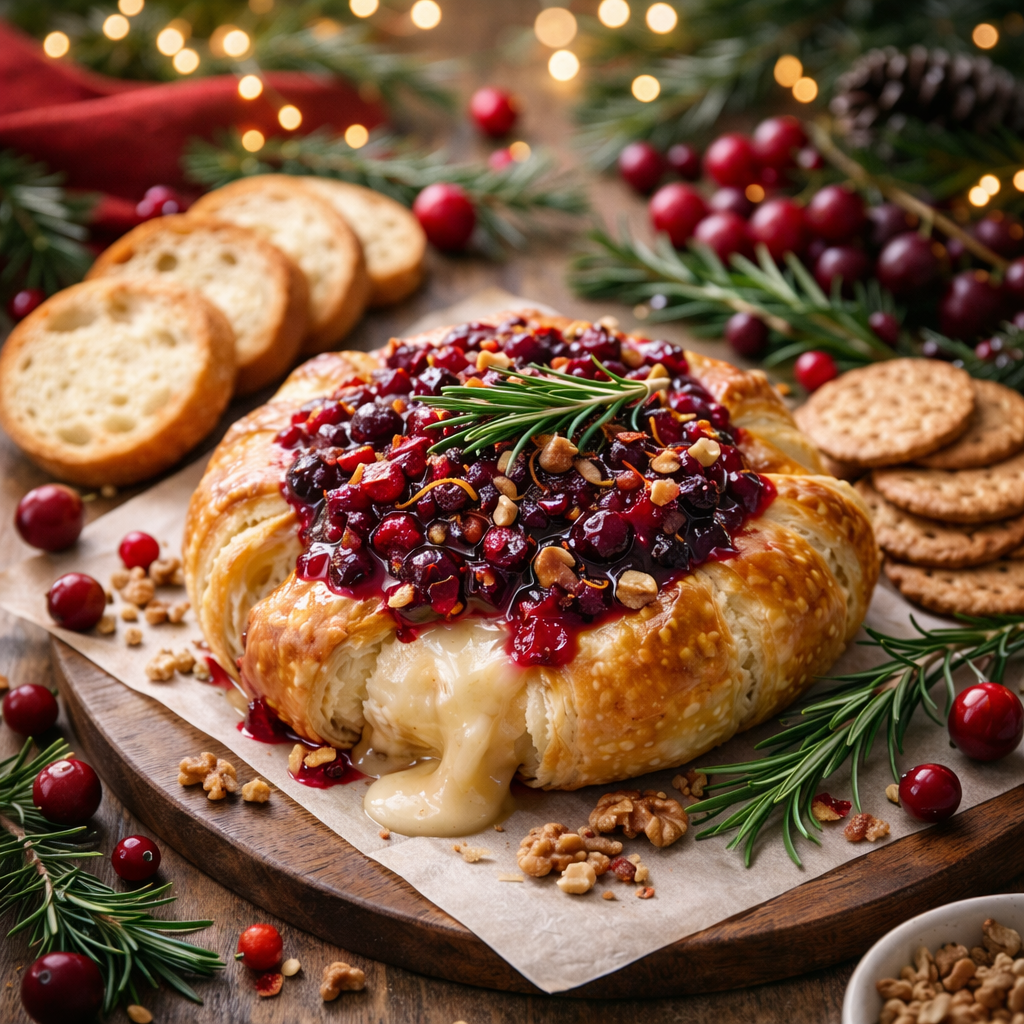
Planning a special occasion spread? Pair this roast with our Classic Yorkshire Pudding for an impressive combination, or start the evening with our Holiday Baked Brie with Cranberries as an appetizer.
See the full kitchen lineup on our Tools & Equipment page.
If you found this post useful, I’d love to hear your thoughts below.